

In an era dominated by rapid notification tones, infinite scrolling feeds, and bite-sized video platforms, a quiet neurobiological shift is underway among today’s youth. The widespread adoption of social media has fundamentally altered how young minds consume information, process complex tasks, and sustain focus. Where previous generations routinely engaged in prolonged, uninterrupted activities such as reading entire books or sitting through hour-long lectures, the modern adolescent brain is increasingly conditioned for rapid task-switching, continuous stimulation, and instant gratification.
At the core of this phenomenon lies the dopamine-driven feedback loop engineered into modern social media algorithms. Platforms like TikTok, Instagram Reels, and YouTube Shorts employ variable reward schedules—the same psychological mechanism that makes slot machines so addictive. Every time a user swipes to a new video, the brain releases a micro-dose of dopamine in anticipation of novel, highly engaging content. When young people spend hours each day consuming material that changes every 15 to 30 seconds, the developing prefrontal cortex adapts to high-frequency stimulation. Consequently, lower-stimulation environments—such as classroom instruction, academic studying, or long-form reading—begin to feel excruciatingly slow and difficult to endure.
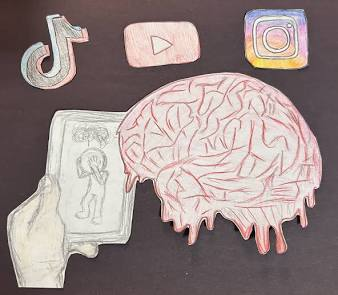
The cognitive consequences of this environment manifest primarily as attentional fragmentation and a decline in the capacity for deep work. Constant notifications, dual-screening, and instant messaging train young individuals to jump rapidly between competing streams of information. Over time, this constant task-switching weakens the ability to concentrate deeply on a single complex problem for an extended duration. Furthermore, as youth become accustomed to continuous visual and auditory novelty, their threshold for boredom rises dramatically, reducing their tolerance for the quiet, reflective periods that are essential for creative synthesis, critical thinking, and independent problem-solving.
Countering the contraction of youth attention spans does not require a complete retreat from technology, but rather a deliberate reset in digital habits and focus cultivation. Encouraging dedicated monotasking periods, where devices are set aside during study or creative work, allows the brain to rebuild its neural capacity for sustained focus. Likewise, introducing deliberate friction—such as app timers, notification silencers, and tech-free study areas—helps break the automatic compulsion to swipe. By fostering greater awareness around digital consumption and balancing screen time with offline pursuits like reading, sports, and hands-on hobbies, parents and educators can help young people reclaim the invaluable human capacity for deep, deliberate focus.